Monday, 17 October 2016

Remainers are paying the price for their dishonesty in the campaign


In the weeks and months following the vote to leave the European Union, much of the debate has centred around precisely what form Brexit will take. The lack of an official Leave plan, coupled with Cameron's arrogance in refusing to lay any groundwork for the eventuality of a Leave vote, means the nature of our withdrawal is still very much up in the air.

Most of this centres around whether or not the UK should remain a member of the EEA, otherwise known as the single market. As I and many others argued relentlessly during the referendum campaign, the EU and the single market are not the same thing, which is precisely why all the protestations of economic doom that the Remain side propagated were a nonsense. From Twitter's echo chamber, to newspaper commentators, right up to the Prime Minister himself, the false conflation of the EU with the single market was one of, if not the, most erroneous facet of the campaign.

Now it seems those chickens have come home to roost. So called 'soft-leavers' such as myself, who see a transitional EEA or 'Norway' style arrangement as a safe, economically neutral means of extracting ourselves from political union with Europe, now find ourselves on the same side as the likes of Nick Clegg and Nicola Sturgeon in arguing for continued single market membership. This is not a good thing. 

Had the Remain side forgone the temptation to depict leaving the European Union as an act of economic self-harm, instead focusing on the arguments predicated upon political union, then now, in the aftermath of a leave vote, they could credibly argue along with liberal leavers, that ok, we shall leave political union, but there is a strong economic case for maintaining single market membership in the short to medium term. 

Ironically, this is far and away the most popular version of Brexit too. A pre-referendum poll had a clear 57% of voters, including 79% of Remainers and 42% of Leavers, backing a Norway style arrangement. Moreover, maintaining current trading arrangements over restricting free movement is the majority opinion too, with a ComRes poll this past week showing a preference for securing trade deals over cutting immigration by 49% to 39%.

This is, as it happens, a false dichotomy. The EEA Agreement contains provisions that can be utilised to curb freedom of movement, giving lie to the need to choose one or the other. Ironically, many leavers now find themselves making this case in order to counter Remainers, our new PM amongst them, who believe their own rhetoric and have taken the Brexit vote as a vote entirely against immigration. Vociferous Kippers aside, this simply isn't the case.

Given the overwhelming support for continued single market membership, this should be an easy case to make. However, the calls by some MPs and commentators to ignore the referendum result entirely and stay in the EU, has meant that the public is sceptical of any arguments from former Remainers to stay in the single market, seeing it as an underhanded attempt to maintain EU membership by the back door. 


Their dishonesty in the campaign has trashed their credibility, regardless of whether their arguments about the UK's continued EEA membership have any merit. As a result, they now fight an uphill battle, and liberal leavers find their cogent arguments weighed down by the baggage of their former adversary's deceit. 

Sunday, 25 September 2016

Labour's real problem? Britons don't want socialism

This piece originally appeared on Conservatives for Liberty on 24/09/2016.


Labour will today elect their new leader, or more likely, the old one. Far from unseating Jeremy Corbyn, the coup, vote of no confidence, and Owen Smith’s leadership challenge, have merely served to galvanise the membership, all of whom overwhelmingly seem to back the right honourable member for Islington North.

Much has been made during the contest about Corbyn’s lack of leadership, and his poor handling of those of his colleagues who don’t reside on the far left of the party. There is no doubting that Jeremy Corbyn has been completely ineffectual as Labour leader. His bizarre ‘letter from Mrs Trellis’ approach to PMQs basically gave David Cameron free shots on goal, with no follow up questions to attempt to pin the PM down.

Corbyn was widely praised for his ‘best performance yet’ when challenging Theresa May over her grammar schools policy recently, yet watching it back it’s hardly an evisceration. He’s merely set the bar so low as to have any halfway competent performance seem spectacular by comparison. Where Labour has put pressure on the government, on issues like Tax Credits – aided by Tory backbenchers mind you – it has apparently been accomplished without much, if any, input from Corbyn.

Whilst this infighting and incompetence has undoubtedly helped Labour’s collapse in the polls, it merely distracts from the real problem Labour faces, namely that Brits, by and large, don’t want socialism.

Make no mistake, that’s all that’s on offer. Owen Smith has skewered himself between trying to earn the support of the PLP and the membership, leading to his entire pitch essentially boiling down to ‘I’m exactly like Jeremy, but with leadership.’ When it comes to policy, they’re very much just slightly different shades of red.

Smith pledges to borrow £200bn to try and boost the economy. Not to be outdone, Corbyn raises to £500bn. The two appear to playing economic chicken whilst the electorate at large look on in bewilderment. Labour’s own report into why it lost the 2015 election came to the conclusion that one of the reasons was that the party couldn’t be trusted on the economy. Yet they’re now deciding between two potential leaders who are so far left they make Red Ed look like the Iron Lady.

Moreover, far from being anti-austerity, voters overwhelmingly supported the cap on benefits and welfare cuts. In a Populus poll for the Financial Times back in April 2015, a massive 75% of respondents supported then Chancellor George Osborne’s £12bn planned welfare haircut. Whilst voters are in favour of a strong safety net, they’re very much of the view that one should earn your own way in the world if you’re able to do so. This flies in the face of Smith’s commitment to an ‘equality of outcome, not equality of opportunity’.

Then there’s the issue of zero hours contracts. Both Corbyn and Smith have continued to back Miliband’s policy – again rejected at the last election – of banning the use of them. This is despite a majority of people on zero-hours contracts reporting that they’re happy with the arrangement and the flexibility they provide. The same survey also showed that more people on zero-hours contracts are happy with their work/life balance than those on fixed contracts. Yet again Labour’s big statism is in conflict with the electorate’s desire to negotiate their own terms of employment.

Perhaps the biggest dichotomy on show is Smith’s stated desire, should he somehow find himself in power, to keep the UK in the EU. The vote on June 23 saw more people vote to leave the EU than have ever voted for anything else in the history of this country. They did so to move power one step closer to the individual and one step further away from the state, yet, with a couple of notable exceptions, the authoritarian tendencies within Labour rejected this notion, and now Smith has decided to make ignoring this overwhelming democratic mandate a key part of his leadership campaign.

The latest bug-bear of the Left is the potential re-emergence of grammar schools. Vehemently opposed by Jeremy Corbyn, and the source of his vigour at PMQs, the policy also saw Owen Smith denounce the Tories as ‘turning back the clock’. But the move to give parents more options when it comes to their child’s education is, once again, a popular one. 62% of parents would get their children to sit a grammar school entrance exam, according to Yougov, and more people are in favour of expanding the provision of grammar schools than scrapping the existing ones or maintaining the current stock. When it comes to centralisation versus liberation, Labour are once again backing the wrong horse.

It is this belief in increased state control, over the economy and much else, which ultimately dooms Labour. Despite what Corbynistas will have you believe, their man hasn’t led Labour to a lead over the Conservatives at any point during his leadership. An average of polls compiled by Britain Elects has the gap at it’s narrowest, a couple of points, in April. But Labour’s position was already deteriorating by the time Hilary Benn was sacked from the shadow cabinet, triggering the mass resignations which ultimately led to the vote of no confidence.

This is because on the whole, the British electorate wants the government to leave them alone and get on with it. This is why they rejected Miliband at the last election, rightly judging that his micro-managing economic policies could spell disaster, and why polling has shown they are consistently rejecting Corbyn. Until Labour realise this, and reject the socialism espoused by Corbyn, McDonnell and their comrades on the Left of the party, they are doomed to electoral oblivion, regardless of who happens to be leader.

Monday, 19 September 2016

Gary Johnson must be President

This article originally appeared on United Politics on 19/09/2016


“If someone had a gun to your head, would you vote for Hillary or Trump?”

“I’d let it go off.”

Libertarian Party candidate Gary Johnson’s only somewhat tongue-in-cheek answer to the question many Americans are mulling over echoes the views of a huge chunk of voters. This US presidential election has churned out the two of the worst candidates the country has ever seen, boasting favorability ratings of roughly -60% each.

And is it any surprise? Hillary Clinton’s campaign has been dogged by various controversies revolving around the FBI investigation into her emails. Although they proved her innocence, she did not survive well. She was portrayed as either incompetent, a liar, or both.

During her time as Secretary of State, Clinton used 8 different blackberries and 5 ipads. None of them could be found for inspection and this seems suspicious in these circumstances. Add to that the controversies surrounding the Clinton Foundation and the allegations of ‘pay to play’. It’s little wonder she is struggling.

Also, there is the general sense that Hillary believes that being President is somehow her entitlement. This only causes animosity amongst people.

Some of that ties into her declaration just a few days ago – now partially retracted – that half of Trump supporters constituted a ‘basket of deplorables’. She dismissed almost a quarter of the electorate as xenophobes. We witnessed how effective that kind of condescension of the disenfranchised was during the EU Referendum.

Recent health scare stories have hindered her credibility. No-one, bar the most ardent of Republicans, would begrudge her getting ill. She’s only human. But after first playing off the concerns about her health as a conspiracy, then claiming she collapsed due to heat exhaustion, it emerged that Clinton was in fact suffering from pneumonia.

The sheer amount of campaigning she managed despite her illness would be impressive had she acknowledged it immediately. But by dismissing it and then down-playing it, Clinton did nothing to alleviate the perception that she is fundamentally deceitful.

Even on policy, she’s not exactly warm and fuzzy. In terms of her approach to military interventions, Clinton would make some Republicans blush. In a campaign even at Dartmouth college last July, she said: “I want the Iranians to know that if I’m President, we will attack Iran. In the next 10 years, during which they might foolishly consider launching an attack on Israel, we would be able to totally obliterate them.”

This is the sort of ridiculous, war-monging statement one would expect from Donald Trump.

Speaking of whom, where to begin? It’s difficult to tell whether the vitriol Trump has espoused are sincerely held beliefs or whether or not he just believes whipping up that kind of hatred, and playing into that kind of fear, represents his best bet at becoming Commander In Chief.

Because make no bones about it; Trump couldn’t care less about the plight of working class America. Much like Hillary, he just wants to be Mr President.

But what an appalling path to take to the White House. Besides being completely incoherent, the man has, in no particular order:

Advocated bombing the families of terrorists
Called for the deportation of 11 million people from the US
Suggested punishing doctors who perform abortions
Said that most Mexicans who cross the border are drug dealers, criminals and rapists, albeit with the caveat that some, he assumes, ‘are good people’

Throw in the litany of misogynistic remarks this nutter has uttered during the campaign, and it’s small wonder Americans are despairing at the choice before them.

Which is precisely where Gary Johnson comes in. He and his running mate, Bill Weld, are both former Republican governors who served in traditional Democrat states, getting re-elected with increased majorities. He’s running on a ticket of fiscal responsibility and social inclusion. He wants to cut taxes and legalise pot. What’s not to like?

But let’s leave policy to one side for the moment. The biggest difference between Johnson and the candidates put forth by the two main parties is that the guy is a decent human being.

He committed a rather sizeable gaffe last week, completely blanking when asked what he would do about the situation in Aleppo. But a subsequent interview later that day on The View (where he answered the Trump or Hilary question), and his official statement shortly afterwards, showed a humility and reasonableness that is completely missing from the other two candidates.

“This morning, I began my day by setting aside any doubt that I’m human. Yes, I understand the dynamics of the Syrian conflict — I talk about them every day. But hit with “What about Aleppo?”, I immediately was thinking about an acronym, not the Syrian conflict. I blanked. It happens, and it will happen again during the course of this campaign.

Can I name every city in Syria? No. Should I have identified Aleppo? Yes. Do I understand its significance? Yes.”

He explained the gaffe as just a momentary brain-freeze that everyone experiences, and he’s right. But equally he acknowledged that he should be held to a higher standard. There was no excuse for the error, no attempt to blame the media. Just an honest ‘mea culpa’.

This humility is a running theme with Johnson. Several times when discussing the principles that underpin his politics he can be heard saying the phrase ‘I could be wrong’. How many politicians do we hear saying that? There is surely no greater sign of intelligence than being able to admit when one has erred and change tack. That is precisely the kind of quality we wish to see in our leaders, rather than grandiose pig-headedness.

Throw in his policies on being pro-gay marriage, pro-choice, pro-free trade, anti-regime change and military interventions, and wanting to make it as easy as possible for immigrants to acquire a work visa to enter the country, and there’s a strong thread of humanity that runs throughout his politics.

His campaign stands apart, too. Whilst Trump and Clinton’s campaigns consist mainly of slinging mud at each other, Johnson’s thus far has been overwhelmingly about his own policies, his own philosophy and what he can offer. It’s less “look how awful they are”, and more “here’s what I think we should be doing.”

Sure, he’s not perfect. But all this culminates in the sense that Gary Johnson wants to be President because he wants to serve his country, not because he just wants to be President.

And, gun to your head, doesn’t that make him the best choice for the job?

Monday, 12 September 2016

UKIP elect their new leader this week, but does it matter anymore?

This article originally appeared on United Politics on 12/09/2016.


This Thursday sees the election of the new UKIP leader. Arguably one of the more difficult jobs in politics, considering the admiration Farage receives from the party faithful. Whoever takes the role will have big shoes to fill.

Replacing Farage will not be a simple task, especially in light of all the controversy that has surrounded this leadership election. The two candidates most favoured for the job aren’t on the ballot paper. Suzanne Evans, who was suspended by Farage back in March for ‘disloyalty’, and Steven Woolfe, who many saw as the obvious successor, was controversially kept off the ballot by UKIP’s NEC.

This act has caused huge consternation amongst UKIP members and supporters. A mixed race, northern working class boy done good with a charismatic presence and professional media style, he was seen by the membership as the ideal candidate to take the party forward to fight Labour in those northern working class constituencies it has long taken for granted, and avoid a slide into irrelevancy in the wake of the referendum vote.

That was how Woolfe positioned himself too. At his leadership rally in Manchester – a few days before the application deadline closed, he spoke of the need to professionalise and detoxify the party.

This is an issue recognised by much of the membership too. All parties have their lunatic fringes, but UKIP are not the swivel eyed loons many make them out to be, just working class people who feel abandoned by the two main parties.

They are well aware of their toxic image, and many of the questions aimed at Woolfe during that rally were on that topic. When asked by one black man how he proposed to shed the party’s racist image Woolfe responded, to cheers and applause, ‘by getting you elected.’

But after Woolfe failed to get his application papers in before the deadline, blaming technical failings of UKIP’s submission system, the NEC ruled that he was ineligible to stand. This has caused uproar within the membership. Branches across the country have been holding votes on whether or not to call for an EGM to discuss constitutional reform – one imagines code for ‘abolish the NEC’ in light of the decision.

Their dismay has been further confounded by reports that Lisa Duffy, a UKIP councillor standing for leader, had her application bankrolled by an NEC member who failed to declare a conflict of interest prior to the Woolfe vote, and news that the Gambling Commission was investigating a large bet placed against Woolfe becoming leader, before the NEC result was known.

This internal warfare means that UKIP have gone from being perfectly placed to capitalise on the Brexit vote and professionalise their image in the post-Farage era, to disappearing into the irrelevancy some predicted would befall them in the event of a Leave vote. Woolfe garnered a lot of media coverage for his fledgling bid, but the contest has been all but ignored by the mainstream media since his exclusion.

The current favourite Diane James does possesses the same media polish that Woolfe has, but being a southerner, will struggle much more to connect with those working class communities up north. This will prevent a steeper uphill climb for UKIP to increase their vote share and really take the fight to a Labour party in equal disarray.

With a less than optimal new leader, and a membership divided and railing against the party machine, UKIP run the risk not of unseating Labour, but following their lead to electoral irrelevance.

The ship Farage steered to a win at the European elections, over 4 million votes at the general election, and ultimately to their finest hour of the referendum win, risks hitting the rocks just as it picks up steam. We will soon find out whether or not the new skipper can successfully steer them to a new course, or whether they will sink to the bottom of the ocean of British politics.

Sunday, 4 September 2016

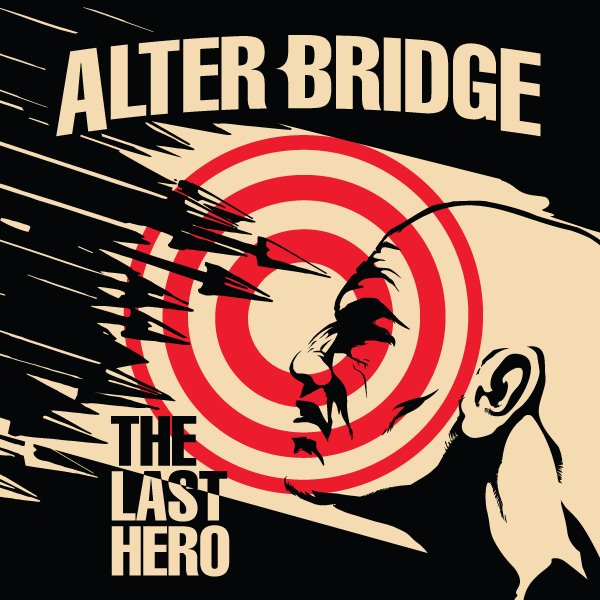
REVIEW: Alter Bridge - The Last Hero

This review was originally written for GetYourRockOut.co.uk


Alter Bridge are now no longer young upstarts, or indeed middling metal bands, but are making the transition into arena rock behemoths. Whilst in many ways The Last Hero picks up from where Fortress left off, there's no sense of complacency, and in playing to their strengths they've laid a blueprint for upscaling their music to suit the live environment they now find themselves conquering.

Opener Show Me A Leader is typical Alter Bridge, epic picking intro, complete with wailing lead, giving way to an almost Dream Theatre-esque riff before Myles Kennedy's distinctive vocals take centre stage. Kennedy is in the form of his life here, pitching beautifully between knowing snarls and soaring high notes. The chorus - bound to be a crowd pleaser when the band heads out on tour - sets a more defiant and hopeful tone for the whole album than we've previously seen.

The contrast of the darker tone and gnarly riffs with Kennedy's most optimistic and defiant lyrics yet give the album a unique vibe within the band's catalogue. The likes of The Writing On The Wall and Poison In Your Veins both boast gut-busting Tremonti riffage and contumacious vocals, the listener in the latter being told "it's time for you to rise and be much more".  Meanwhile Twilight sees the band entering the realm of political commentary. 'Tomorrow is contingent on the tolerance of every heart' - clearly calling out the likes of Trump on his plethora of bullshit, and probably the most compelling of Kennedy's lyrics. Just the right side of cheesey, they're saved by the sincerity with which Kennedy tends to infuse all his songs. Not just a commentary for commentary's sake but more a venting of his psyche, dealing with a larger theme with a still deeply personal approach.

The lighter-in-the-air ballades that Alter Bridge do so well return too. You Will Be Remembered a letter to loved ones lost in the vein of ABIII's In Loving Memory. The stand out track though is My Champion. Featuring a cascading lead intro and a genuinely uplifting chorus, it's slightly evocative of Bon Jovi, albeit with a much dirtier amp. Though the title flirts with power ballade cliche, it does well to stay the right side of it and was ultimately the track I hit the repeat button on the most.

Most interesting though are the more expansive tracks. The atmospheric Cradle To The Grave deploying acoustic guitars to create a Dance of Death era Iron Maiden vibe, and This Side Of Fate is equally ambitious. Violining intro and picked verses showing a characteristic deployment of dynamics to create the desired emotional response in the listener. Alter Bridge are becoming extremely adept at telling a story through not just the lyrics, but the music itself. There's a prog like Iron Maiden middle section again and they experiment with song structure to great effect, Kennedy's vocals truly soaring. The penchant for story telling surfaces again in the closing title track.

These more impressive, experimental songs hint of the band's possible future direction. Further exploration of the more expansive material could indeed be an extremely fertile field to plow. The Last Hero is a typically accomplished affair for the band. The only minor quibble would be Tremonti's lead work. Always crisp and technically impressive, it nevertheless lacks the real soul or gravitas of say, an Alex Lifeson solo. He should break out the blues albums and heed Peter Green's advice to Gary Moore of playing 'every other lick' to avoid becoming too much of a shredder, and set off those more epic tracks with some truly soulful lead work. Nevertheless, The Last Hero is yet another sterling piece of music from the boys from Florida.


Tracklisting:

Show Me a Leader
The Writing On The Wall
The Other Side
My Champion
Poison In Your Veins
Cradle To The Grave
Losing Patience
This Side Of Fate
You Will Be Remembered
Crows On A Wire
Twilight
Island of Fools
The Last Hero

Tuesday, 30 August 2016

Don't panic, the delay to Brexit is much needed

This article originally appeared on United Politics on 30/08/2016.


One of the big criticisms of Vote Leave during the referendum campaign was that they had no plan for actually leaving the EU, or ‘what Brexit looks like’. Though it gave Vote Leave the campaign flexibility to advocate different positions and simultaneously none at all, it was a legitimate criticism, and one that has become all the more substantial in the wake of the vote.

That said, the same criticism can be levied at the government. It was unspeakably arrogant of Cameron to call the referendum and not lay any groundwork for the possibility of a Leave vote. This lack of preparation has been made all the more apparent by the floundering and half-baked ideas we’re currently seeing.

Top of the list we’ve got the Tory right and UKIP maintaining calls for a ‘hard Brexit’, advocating pulling out of both the EU and the Single Market and damning the consequences. This shows a fundamental lack of understanding of just how entrenched those institutions are in our own operations. There’s a certain cognitive dissonance involved in, rightly, arguing that the EU had too much influence and control over our governance and believing that we can harmlessly eradicate that in one swift movement. Brexit will not be an event but a process, taking five, seven, ten years or more, and we must leave the same way we went in; gradually, and in stages.

The basis of this ‘hard Brexit’ plan is the desire to strike a bespoke Free Trade Agreement with the EU, which itself relies on several misconceptions. Firstly, negotiating a bespoke deal of the required scope simply cannot be done in the two year time frame allowed by Article 50. Advocates of doing so were the same ones who rightly pointed out the EU’s ineptitude of signing trade deals in good time. The deal with Canada for example has taken seven years to negotiate so far, and has still not been implemented, and trade talks with India have been shelved after nine years of back and forth. Yet a bespoke deal with the UK can apparently be agreed within a couple of years. There’s that cognitive dissonance again.

‘So be it’ the hardliners say, suggesting reverting to WTO rules and replying in kind should the EU impose tariffs. The irony of this position is that they clearly have no idea what those WTO rules are. They cite the rule that nations cannot impose discriminatory or punitive tariffs, apparently unaware that the EU is recognised by the WTO as a Regional Trade Agreement and is thus permitted a certain level of discrimination against non-members. Under such a scenario the UK would acquire ‘Most Favoured Nation’ status and, under those WTO rules, the EU would be obliged to impose tariffs. The UK however would not have RTA status and thus would fall foul of those WTO rules preventing discrimination should we seek to impose tariffs on EU exports.

Tariffs though, are much of a red herring. It is regulatory harmonisation that is the key issue, and why we should not be looking to pull out of the single market, at least not during this first Brexit step. Meeting regulations is one thing, but proving you’ve met those regulations is something else entirely, and this is where the Single Market comes in. Without the required paperwork exports into the EU must go through various customs checks to ensure they meet those standards. This would mean our EU trade would grind to a halt with dire economic consequences.

“But China and Australia don’t have free trade deals and they trade with the EU easily enough.” That’s because whilst they don’t have comprehensive FTAs, they, and others, have a multitude of Mutual Recognition Agreements, smaller deals that facilitate trade in various areas by adopting common standards.

This brings us onto the Swiss option, which the chancellor is now reportedly advocating. More realistic than the ‘hard brexit’ option, it is not without it’s challenges. The EU has little appetite for replicating Switzerland’s model of multiple deals and the two year Article 50 timeframe again represents a significant stumbling block. The latter problem could be overcome by going into the negotiations and requesting an immediate extension to the negotiating period before even putting our cards on the table. However, as any extension needs the unanimous agreement of the remaining 27 member states, it’s a risky strategy.

Finally the Norway option is under great misconceptions from both sides of the debate. The Financial Times reported that the City had rejected this scenario in favour of the Swiss option as Norway has to ‘accept all the rules without having a say in them’. Merely reading the EEA agreement itself puts this one to bed. Through the EEA Joint Committee, Norway and the other EFTA states, have significant input into the formation of Single Market regulations and even have a de facto veto over their implementation. This veto has never been used precisely because of the extensive consultation process they are involved in.

Furthermore, it makes the false assumption that the EU is the top table. On the contrary, it is increasingly a middle man between it’s member states and the actual top tables of global trade. It is here where Norway wields significant influence in forming regulations before they get anywhere near the single market. Far from having no say, it arguably has more. Leaving the EU gives us the opportunity to be the architects of a global single market and leave behind the parochialism of the EU’s arrangement.

Nor does the EFTA/EEA option mean accepting freedom of movement. Lichtenstein has set a precedent, through the measures set out in Articles 112 and 113 of the EEA agreement, of having quantitative restrictions on free movement. There is no reason why the UK cannot follow this precedent in order to gain greater control over immigration. Moreover, it’s important to remember that this EEA move is merely the first step. Once this transitional arrangement is in place, there would be added clout to negotiate free movement reforms for the EEA as a whole.

The dearth of informed people involved in this process, Remainers and Leavers alike, has been incredibly depressing. Whilst the think tanks that usually exist to instruct the government on how to do everything have been missing in action, there have been some who have been doing the necessary research. The Flexcit plan from the Leave Alliance – whose sterling work informs much of this article – should be shoved into the hands of every civil servant and government minister remotely associated with getting the UK out of the EU.

The upcoming French and German elections are a good reason to delay triggering Article 50 until we know who it is we shall be negotiating with. In the meantime it offers the opportunity for those involved to do the necessary research so as to go into those negotiations with a clear picture of what we want, what we need, and what is possible.

Share this:

Tuesday, 23 August 2016

Forcing a Muslim to sell bacon: A riposte

This article originally appeared on United Politics on 23/08/2016.


Fellow United Politics contributor Samuel Hamilton wrote a piece last week defending French authorities’ decision to warn a Muslim shop owner he has to sell alcohol and pork or face closure. Doing so, he argued, conserved “a relatively insignificant part of their life and identity – the cold beer after work, the bacon sandwich on a Sunday morning – as a means of conserving traditional values and liberty for a few ordinary French citizens.”

Leaving aside the idea of a bacon butty being a French tradition, my issue with Samuel’s arguments is his conflating conservatism with libertarianism, calling out the latter for defending the shop owner in this instance. “It seems that many conservatives have forgotten that our primary responsibility is to ‘conserve’ and that the pursuit of liberty and freedom of the markets is virtuous only after we have conserved the things that make them possible” he says.

The problem with this analysis is that libertarians don’t see liberty and freedom of the markets as the goals to be achieved by the values Samuel espouses, but rather the very means to promote and secure those values.

He is right that the fundamental guiding principles of libertarianism, free trade and free speech, form the cornerstone – to varying degrees – of western civilisation, and that the biggest threat to those principles today is Islamism.

But where Samuel falls down is in his assertion that “total ideological freedom is not and has never been desirable in a free country. And where an anti-libertarian religion spills into the bounds of ideological or political influence, we should see that it is curtailed.” Generally speaking he would be right, but in this instance he is calling on the state to do that curtailing, and that’s where he loses me.

The only answer to bad speech, is more speech. We shouldn’t be calling on the state to limit the freedom of ideologies we disagree with. The danger in that should be self-evident. Only by ensuring complete freedom of speech, do we guarantee that bad ideas are effectively challenged, and that good ideas gain traction and win out. The marketplace of ideas should be a free trading one, not a protectionist one.

When it comes to avoiding political influence of ‘anti-libertarian religions’, the simplest way is to ensure that political institutions are entirely secular. It’s an area where we fall disappointingly short in this country. From having an established church and bishops in the house of lords, to the continuing state funding of faith schools, we have a long way to go if we want to lead by example and refute the notion that religious ideology should be conferred on us by our executives.

But when it comes to the public at large, if we believe in the free market and free speech, we should rely on them to provide the outcomes we desire. I abhor Halal slaughter and so try to avoid any shops or restaurants where the products sold are prepared that way. Similarly, if the residents of Colombes disagree with the ideology behind the store, nobody is forcing them to shop there.

Being on the outskirts of Paris, I’m sure they can quite easily find their booze and bacon elsewhere. And if they do, in large numbers, eventually the store will no longer be a viable business and the problem goes away by itself, without state intervention. That is precisely the outcome that libertarians, and supposedly conservatives, are supposed to champion.