Saturday, 20 August 2016

It's time to scrap the licence fee, and the BBC has nothing to fear

This article originally appeared on United Politics on 20/08/2016.


From September 1, users of the BBC’s iPlayer will need to have a TV licence. Currently anyone who watches live TV needs one, but they can go without if they only use on demand services. This loophole reportedly costs the BBC £150m a year, and is to be closed as part of the deal which will see the corporation shoulder the burden of free licences for pensioners.

In order to enforce this new law, the Telegraph has reported that new ‘sniffer vans’ will spread out across the country. One computer expert has suggested that these detector vans could use a technique known as ‘packet sniffing’. Dr Miguel Rio said that licence-fee inspectors could view encrypted ‘packets’ of data travelling over a home Wi-Fi network, and by controlling the size of the packets the iPlayer uses, allow them to establish if devices at homes without television licences were accessing BBC content.

This is an incredibly invasive move which privacy campaigners are rightly worried about. Thankfully, the BBC have denied that they will be using packet sniffing technology, stating ‘While we don’t discuss the details of how detection works for obvious reasons, it is wrong to suggest that our technology involves capturing data from private Wi-Fi networks.’ This raises the question though of what techniques the BBC is employing to hunt down non-licence fee payers.

The comptroller and auditor general of the National Audit Office, Sir Amyas Morse, described in his latest report how  ‘where the BBC suspects that an occupier is watching live television but not paying for a licence, it can send a detection van to check whether this is the case. Detection vans can identify viewing on a non-TV device in the same way that they can detect viewing on a television set. BBC staff were able to demonstrate this to my staff in controlled conditions sufficient for us to be confident that they could detect viewing on a range of non-TV devices.’ This would be targeted surveillance under the Regulation of Investigatory Powers Act, but it still doesn’t address how the BBC identifies occupiers it suspects aren’t paying the licence for surveillance in the first place.

All of this seems rather moot. The entire licence fee system is incredibly antiquated in the internet ready, 21st century. The most obvious solution to the iPlayer problem seems to be to tie in the TV licence with a username and password that gives you access to the on demand services. The Netflixification of the iPlayer is the simplest option and doesn’t involve the need for surveillance vans with complicated and expensive technology. The only reason one suspects the BBC is averse to this move is that it puts them on the path to a subscription based service that for some reason the corporation seemingly wants to avoid at all costs.

But why? Proponents of the licence fee often crow about what great value for money it is. I couldn’t agree more. Auntie makes, and has made, great content over the years. From it’s brilliant documentaries, fronted by the likes of Sir David Attenborough, to hit dramas such as Downtown Abbey and light entertainment shows like Great British Bake Off. It has franchises such as Top Gear and Doctor Who that bring in huge audiences, not just in the UK, but across the globe, and has a rich history of developing brilliant comedy shows.

This writer originally only got interested in politics as a young teenager so that I would understand the jokes and references on Dead Ringers (the last series of which was the best one in years). It has it’s detractors sure, but generally speaking the Beeb has a sterling reputation for providing great television and great radio. There is nothing to suggest that that quality would disappear in moving to a subscription service.

Netflix may operate on a much smaller scale, but it is still producing some of the greatest TV shows out there right now, why should the BBC be any different? Indeed, with a greater emphasis on the carrot rather than the stick, it could well end up producing even better content than it does now, enticing even more viewers. The current coercive funding model is incredibly illiberal, and an anachronism in this day and age. It’s time to scrap it and force the BBC to compete on a commercial level. I have no doubt that it would flourish.

Saturday, 13 August 2016

Forget the 'new politics', Jeremy Corbyn is the archetypal politican

This article originally appeared on United Politics on 13/08/2016.

Duplicity and hypocrisy. Power at all costs. Cronysim. These cynical characteristics are ones that embody the typical caricature of a politician. When Jeremy Corbyn won the leadership of the Labour party, he declared a victory for a new kind of politics, focused on issues and principle and devoid of any party political point scoring, or the self-serving spin and corruption seen to have embodied the Blair era. The focus was not to be on individual politicians or parties, but on the issues that the people of this country faced and how best to tackle them.

Many of his supporters backed Corbyn for precisely this reason. Fed up of PR men and women who seemed more interested in playing the game of politics to their own ends rather than actually running the country to the benefit of it’s citizens, they cheered a man who had routinely eschewed partisan issues and stuck to his principles – often in defiance of the party whip – all the way to leader of her majesty’s opposition.

I confess that whilst I disagree with large swathes of his politics, I too was rooting for Corbyn to win the Labour leadership. Aside from the cynical desire to see socialism quashed in UK politics for at least another generation, politicians of principle are few and far between these days. Since taking up the role though, Corbyn has been nothing but a disappointment, proving himself to possess all those undesirable characteristics we have come to expect in our politicians.

First up was Corbyn’s declaration for the Remain campaign. This represented a complete about face on his previous position. He voted to leave the then EEC in 1975, he voted against the Maastricht Treaty in 1992 and the Lisbon Treaty in 2008. His website was full of articles decrying the EU and its corporatist nature.

These were subsequently removed of course, displaying the sort of behaviour his supporters saw him as the antidote to. It’s entirely possible that Corbyn did indeed reassess his view on our EU membership, though it’s much more likely this about turn was an attempt to maintain some semblance of party unity in the wake of the Trident row. Indeed, when asked why he had changed his mind, Corbyn stated that the Labour Party backed EU membership and ‘that’s the party I lead and the position I am putting forward’.

So much for principle over party. The reports that in the privacy of the voting booth Corbyn checked the box marked ‘Leave the European Union’ only further demonstrated this ‘one thing in public, another in private’ casuistry of his EU position.

Duplicity and hypocrisy? Check.

Following the vote, we started to see the first glimpses of Corbyn’s desire to hold on to any position of power. Hilary Benn had the audacity to challenge Corbyn directly about his lack of leadership during the referendum campaign and was promptly sacked as shadow foreign secretary. Having booted the first rat overboard, Corbyn saw the rest of the opposition front bench follow suit, ultimately culminating in the vote of no confidence and leadership challenge we’re currently witnessing.

Interesting comparisons have been drawn between Corbyn and Jim Murphy. The former leader of Scottish Labour won his vote of no confidence, but resigned anyway, knowing such a narrow margin made his position untenable. Even Margaret Thatcher resigned after winning the first round of her no confidence vote. Corbyn though, has opted to cling onto the leadership despite the motion of no confidence passing with flying colours, 172 votes to 40.

This railing against PLP ‘disloyalty’ is made even more ironic when considering the leadership challenges Corbyn himself has instigated over the years. When he orchestrated a challenge to Neil Kinnock in 1988, the Labour leader immediately set about gaining nominations to ensure he was on the ballot and send a message, rather than hiding behind his incumbency. Corbyn, knowing he would be unlikely to secure the required nominations, has opted for the latter. This meant a court battle, further damaging Labour’s already bedraggled reputation as an effective parliamentary force.

Power at all costs? Check.

And now we have the controversy surrounding Shami Chakrabarti’s peerage. Even the casual observer has noticed the ballooning problem of anti-semitism that appears to permeating Labour. But the inquiry found only an ‘occasionally toxic atmosphere’, as if claiming ‘Jews were the financiers of the slave trade’ as one activist did, was merely some political flatulence to be wafted away. Corbyn himself appeared to compare Israel to ISIS at the report’s launch.  Yet Chakrabarti merely recommended members ‘should resist the use of Hitler, Nazi and Holocaust metaphors’.

What appeared to be a mere whitewash has since acquired the stench of corruption. Barely weeks after the inquiry’s publication, Corbyn has nominated Chakrabarti for a peerage. This is despite last year saying ‘Labour will certainly not nominate new peers for the Lords, which risks undermining its legitimacy.’ A proper assessment of Labour’s antisemitism problem may have damaged Corbyn’s credibility as leader further still. This now looks extremely dodgy, ‘whitewash for peerages’ being the phrase bandied about.

Hyprocrisy? Cronysim? Power at all costs? Check, check check.

And yet why are we surprised? Corbyn has been an MP since 1983. A man spending 33 years working in the commons can quite comfortably be defined as a career politician. He allegedly divorced his ex-wife for insisting on sending their son to a state grammar school, yet he himself graduated from one. Though in fairness he only managed two E grade A levels, so one could see why he thinks they’re no good. But most of all, the man is a committed socialist. If history teaches us anything it’s that socialist governments invariably succumb to corruption, deception and authoritarianism.  Corbyn’s leadership could well be remembered for the same things.

Sunday, 7 August 2016

Nintendo NX: Thoughts, Hopes, Fears and Speculations


As we inch towards an official unveiling of the NX the hype train and rumour mill are getting increasingly active, and whilst a metric tonne of salt needs to be taken with each report until Nintendo give us an official announcement, certain things appear to be clarifying. Or at the very least, looking more and more likely.


Over the past couple of weeks we had the big story from Eurogamer claiming that the NX would be a portable console with detachable controllers. Citing multiple sources it also said that the device would come with a TV docking station to allow users to play games on their TV, as well as using cartridges instead of discs. This ties in with the prevailing thought on the console, that it is a portable/home console hybrid, borne out of Nintendo's decision to merge their handheld and home console hardware divisions back in 2013.


Combining Portable and Home Consoles


I was initially less than enthused by this hybrid prospect. Whilst I own both a 3DS and a Wii U, they both offer very different experiences, and I was wary of a device that tried to consolidate those experiences into one machine, fearing it could be to the detriment of one or the other. Much of it depends on the focus of the device and how well Nintendo can amalgamate those two different disciplines into one product. There needs to be the sprawling adventure games like Zelda and Metroid, as well as the big hitters like Mario, but equally there will be a place for games that are better suited to a portable platform. Games like Animal Crossing and Tomadchi Life. Interestingly, certain franchises already span that divide - your Mario Karts and more recently Smash Bros - but a franchise like Zelda currently offers vastly different experiences across the disparate platforms. However, the more I've thought about it and the more information that appears to be coming to light about this console, the more excited about it I have become.

Breaching the gap: Smash Bros on 3DS and Wii U

One of the big issues though is storage. The Eurogamer piece mentions that Nintendo initially considered a digital only platform before opting for cartridges. As someone who traditionally has always favoured physical media, I've increasingly found myself moving towards digital versions of my games. Especially when it comes to 3DS, as it removes the need for carrying a load of cartridges around with me whenever I'm gaming on the go. But I've also found myself moving towards digital on Wii U too, especially for games where I may only want to jump in for a quick session. I have digital versions of 
Splatoon and Starfox, as well as numerous indie titles, but have also found myself wishing I had purchased the likes of Mario Kart 8 through the eShop too. If NX is indeed this portable hybrid, it will need a large storage capacity in order to optimise the 'take your games on the go' experience. Traditionally this has not been an area where Nintendo has excelled. The Wii had a tiny hard drive, the larger version of the Wii U also fills up very quickly, never mind the 'core' model, and I know of few people who didn't immediately put a larger SD card in their 3DS. The NX will need a large hard drive, especially if the reports of Nintendo's recommended 32gb cartridge size prove to be true. That's worryingly small given the size of many modern games.

Keeping Third Parties On Board

This is where the third party issue comes into play. The biggest problem the Wii U had was it's sporadic software releases. Nintendo can only turn out so many games a year and it needs third parties to fill those gaps. Unfortunately, the technical limitations of the Wii U made it difficult, if not impossible in some cases, to port games from the other consoles in the market to Nintendo's hardware. Nintendo badly needs to learn from this with the NX. Without the support of third parties, fewer people will buy the console, and if there isn't a worthwhile install base, fewer developers will make games for it, leading to fewer users and so on and so forth. Ensuring they don't get trapped in this cycle will be the overriding goal of Nintendo going into launch. This is the reason President Tatsumi Kimishima has given for eschweing a holiday release, and aiming for a March 2017 launch of the console. Nintendo want a strong launch line-up to get a healthy install base secured from day one. 

Happily, Nintendo are seemingly positioning themselves to lead the charge on this, with MCV reporting that, as well as Zelda, new Mario and Pokémon games are slated for the first six months of the console's life. Add to that Pikmin 4 which Miyamoto has said is all but finished (I'd be surprised if that wasn't now an NX title, maybe even a launch game alongside Zelda?) and the titles third parties have already confirmed are in development - Dragon Quest from Square Enix and the new Sonic title for example - and the NX should have a rather strong launch. Longer term though, architecture will also play an important role.
Nvidia's Tegra X1 chip, rumoured to be in NX dev kits

On this point, much has been discussed about the Nvidia Tegra chip the console is reportedly using. Dev kits are apparently sporting the Tegra X1 chip, currently found in the Shield Android TV, which would put the NX's power somewhere in the region between PS3 and PS4. This would give the NX some impressive visuals for a handheld, but would still leave it under cooked when compared to it's biggest competitors. Whilst Nintendo have eschewed the arms race and going toe to toe with Sony and Microsoft over the past couple of generations, this does give third parties a headache when it comes to developing for Nintendo's system alongside Playstation and Xbox.

The other option would be Tegra's X2 chip and as well as being more desirable, looks increasingly likely. Rumours have circulated that the NX will be operating on Nvidia's Pascal architecture, which the X2 utilises. What's more, the X2 is also much more power efficient. This will be crucial when you consider the importance of a decent battery life in a handheld console. It would also put it approaching the region of Xbox One in terms of power, at least when docked. The prospect of a Supplemental Computing Device (something Nintendo was recently granted a patent for) within the cradle for the NX to increase it's power when in docked mode could mean a power level that allows it to at least not be unduly disadvantaged when compared to it's competitors, making it easier for third parties to port their games to the NX and keep that crucial software library well stocked.

Games, Games, Games

As mentioned earlier, that library will need to be stellar from the get go. Breath of the Wild, if it turns out to be a launch title, would certainly be a strong start, especially if it delivers on it's early promise. The sheer hype surrounding it's E3 unveiling could really give the NX launch the pizzazz it needs. Naturally there will be a Mario game at some point. If the one rumoured to be coming within that six month launch window turns out to be something in the vein of a Super Mario Sunshine or Galaxy then that will certainly help carry any Zelda generated momentum forward. As for the Pokémon game Game Freak are apparently working on, it's difficult to say. If it is indeed coming within that first six months, I'd be very surprised if it was a full-on adventure. More likely it's a Pokémon Colosseum type game that maybe links somehow to the upcoming Sun and Moon games for 3DS. Further down the line though, if NX does end up replacing both Wii U and Nintendo's portable hardware, this raises the prospect of a fully fledged Pokémon title running on powerful hardware that can be played both on the go and on your TV. The much sought after Pokémon MMO could finally be on the horizon.


Pokémon Sun and Moon. The final portable only, mainline Pokémon games? 


This switching between the two throws up interesting ideas for other series like Animal Crossing too. Pottering around my town on the TV whilst still being able to check in to harvest fruit on the go sounds like the perfect way to play that game. It will be interesting to see what fun gameplay mechanics Nintendo and other developers come up with that utilise the unique features of a hybrid console like this. Streetpass style rewards for taking NX on the go, that unlock things when you next dock to your TV perhaps? 

It does throw up some dilemmas for other series though. 
Take Zelda for example, Would NX see an end to top down titles like A Link Between Worlds, or does this portable characteristic mean that Breath of the Wild will end up being a one off? Ideally of course we'll get both experiences, though how they will be marketed will be interesting. The thought of a top down Zelda with beautiful HD art direction however, certainly has me excited.

Ultimately, there will need to be a good balance of the sprawling adventures we're used to seeing on a home console, titles that traditionally are better suited to a portable, and indeed games that work just as well in either environment. This latter type of game is why I think a
Smash Bros. Championship Edition would make a perfect launch title. Porting the Wii U/3DS game complete with all DLC and perhaps even with all the Wii U and 3DS maps in one place, would demonstrate the features of the console perfectly. Train on the commute to work, before heading home, jumping online and taking on the world on your TV. Given the long development time of a Smash Bros title, I imagine this is the most likely scenario. Sakurai and his team put a huge amount of work into that game and the development time on a new entry from the ground up for NX would put it several years into the console's life cycle. They could even dangle the promise of future DLC for the Championship Edition to entice Smash fans who own the game on Wii U and 3DS to make the switch to NX. This would also be easier to do than creating a whole new entry.


Other Wii U ports we could potentially see 
include Super Mario Maker - assuming the NX's screen has touch capabilities - and Splatoon. Personally though, I think Splatoon would benefit more from a direct sequel instead of a port, taking advantage of the unique features of the NX. Smash Bros has been perfected over 17 years and five iterations. Splatoon on the other hand has only it's first title to it's name. A Spla2oon that improved on the formula of the first would make for a great addition to the NX's library. There's no reason why it couldn't include a few fan-favourite maps and weapons, much like Mario Kart's retro tracks. It would even be a system-seller in Japan where Splatoon is huge.


Nintendo rarely fails to deliver on software though. The Wii U may have flopped as a console, but it is home to some of the best software the big N has produced. The key for me is that third party question. I want to be able to play FIFA and Call of Duty and other multi-platform titles on my NX. Especially as cross-platform play becomes more prevalent. And whilst the hardcore FPS fans are unlikely to play the likes of COD on NX, if Nintendo can ensure those multi-platform staples come to their hardware, then they'll be in a much stronger position than they have been this generation.


Marketing


If the software issues are kept in check, then the biggest challenge will be how the device is marketed. The Wii U suffered horrendously from poor messaging. Consumers were baffled as to whether it was a new device, an addition to the Wii, or something else entirely. Similarly, Nintendo need to think about how they are pitching the NX. Is it a successor to the Wii U, the 3DS or both?


The Wii U. Confusing branding.


Nintendo needs to make a decision as to whether to sell the NX as either a games console you can take on the go, or a portable console you can play on your TV. For what it's worth, I believe the former sounds like a more exciting proposition, but it does put it in more direct competition with PS4 and Xbox One than taking the latter approach. Regardless, if it's priced right, has the right library and isn't hugely under powered when compared to those big hitters, a simple message - devoid of any Wii branding - could be a big hit with that strong USP. If pitched similarly to the Wii as a second console to accompany the Xbox or Playstation, it even has the potential to hit the sort of highs the Wii did. Especially if Nintendo's goal of using mobile to introduce consumers to their brands in order to entice them over to more traditional experiences comes to fruition.


In conclusion, despite initially being lukewarm on the idea, I've grown to be rather excited by what the NX might entail. If it does manage to kick out some decent power, ensuring it isn't abandoned by gamers and developers alike, then the prospect of consolidating my home console and portable gaming into one device is an enticing one. Regardless, Nintendo will undoubtedly kick out some great software - Breath of the Wild means it will be a day one purchase for me anyway - but if everything lines up, the NX could be one brilliant console indeed.

Thursday, 4 August 2016

REVIEW: Blues Pills - Lady In Gold

This review was originally written for GetYourRockOut.co.uk


Two Swedes, an American, and a Frenchman go into a recording studio. What results is far from a joke, but rather a sterling piece of soulful, blues rock psychadelia. The Sweden based foursome have taken the 60s voodoo template of their 2014 debut and added lashings of soul and gospel elements to great effect.

This embellishment of the Blues Pills sound is evident right from the start, the title track opening with marching piano to the foreground and vocalist Elin Larsson's soulful banshee soaring over the top. The gospel style backing vocals adorning the track's crescendo complete the evolution from blues rock foreplay to psychedelic soul climax.

And the soulful notes keep coming, Little Boy Preacher bringing to mind flares and platform shoes rather than black lights and tie-dye shirts, and I Felt A Change is a straight up soul ballade, the simple electric piano really showcasing the emotion of Larsson's voice.

Not that the band have been castrated. Dorian Sorriaux's guitar may be less prevalent this time around, but it's subtlety makes it all the more impactful when it does take centre stage. The lysergic riff of Burned Out's atmospheric blues, coupled with the subtle organ, creating a remarkably transcendent atmosphere. Offset by a tremendous shuffle, and with Larsson taking it to church in the finale, it serves as a tremendous highlight only three tracks in.

Elsewhere there's more groove in the form of Bad Talkers and more blues powerhouses in the shape of You Gotta Try and Won't Go Back, the former with subtle similarities to former tour partners Rival Sons. Tony Joe White's Elements and Things gets the Blues Pills treatment to round things out. Sorriaux's crowning moment of the album, with the wah pedal being worked to the bone, his Peter Green-esque phrasing and economic note selection has him knocking on the door to be included alongside Joe Bonamassa and Scott Holiday in this generation's guitar heroes.

The work ethic embodied by Blues Pills' relentless touring in the wake of their debut has clearly paid dividends when it came to their sophomore studio effort. There's a greater variety in material than can be found on that freshman release, though it is very much more evolution than revolution. Some further experimentation and the taking of a few greater risks could've pushed the needle from fantastic to phenomenal, but on this trajectory the band are well on their way.


Tracklisting:

Lady In Gold
Little Boy Preacher
Burned Out
I Felt A Change
Gone So Long
Bad Talkers
You Gotta Try
Won't Go Back
Rejection
Elements And Things

Wednesday, 3 August 2016

Theresa May must be the luckiest politician alive


In the wake of the Brexit vote, British politics has been equal parts enthralling and bug-nutty, bat shit crazy, with the three largest parties in the country all playing out various soap operas. The Prime Minister resigned, prompting his would be successors to begin a typical Tory blood letting. Labour back benchers mounted a coup against their leader, plunging the party still further behind in the polls. And the man arguably most responsible for securing the referendum, had a second crack at resigning as leader of UKIP and launched that party into internal warfare as well. Given the current landscape, our new Prime Minister could be forgiven for feeling a little smug.

Because for Theresa May's Conservative Party, there is currently little to no electoral threat. Her Majesty's opposition is missing in action. Jeremy Corbyn may have rallied several thousand young socialists to his cause, but the wider electorate who rejected Ed Miliband's brand of leftist politics at the last election aren't about to lend their vote to a man who's own politics make Red Ed look like the Iron Lady. The PLP might just know this, and could be why they launched a leadership challenge in the wake of Corbyn's sacking of Hillary Benn. However. far from solving the issue, their approach has all but consigned Labour to electoral oblivion. Their ultimate choice to challenge Corbyn isn't someone with a more centrist approach, but with equally strong socialists views. Indeed, Owen Smith's entire pitch for the leadership seems to be 'Corbyn's policies, but without the stigma'. Not that it really matters, even taking into account Labour's attempts to prevent entryism, Corbyn still enjoys the backing of huge swathes of the membership. It's incredibly likely that he will fend off Smith, and use his renewed mandate to truly purge the front bench of Blair/Brownites. This may will win him all those student votes that previously went to the Lib Dems (remember them?) but will alienate much of Labour's traditional working class support. Those people don't want the kind of state enforced egalitarianism Corbyn espouses, but the opportunities to climb the social ladder themselves.

This is precisely where UKIP should be planning to mount their assault. They already had strong second places in many of these Labour seats at the last general election and with the right approach could do to Labour in it's northern heartlands what the SNP did north of Hadrian's Wall. Prospective leadership candidate Steven Woolfe knew this, and it was precisely this platform on which he was launching his leadership bid. A charismatic, media-savvy operator of mixed race heritage and a working-class-lad-done-good back story, he was perfectly positioned to lead UKIP into the post-Farage era, clean up the party's image and take the fight to Labour in those northern towns and cities where their traditional base is feeling left behind. Alas for Woolfe, and much of the UKIP membership who support him, it's not to be. Following poor administration procedures, and an apparent attempt from some on UKIP's National Executive Committee to undermine his bid, Woolfe has been successfully kept off the leadership ballot. Three members of the NEC have resigned in protest, admonishing their colleagues in a statement, claiming the NEC is 'no longer fit for purpose' due to an 'escalating megalomania that is detrimental to the functioning of the party.' Those candidates that did get their paperwork in on time are mostly unknowns. The exception being the new favourite Diane James. Also confident in front of the TV cameras, but much too southern to really strike a chord in those northern constituencies where UKIP need to focus their efforts.

And amongst all this, Theresa May must be grinning like a loon. Having seen her main leadership challenger knifed by the next strongest contender, ultimately dooming both of them, she was able to ascend to the position of Tory Party Leader with little effort, and having got there, discovered that there's no party willing to challenge her government. Labour is sawing off the branch it's currently sat on and UKIP has tied it's own shoelaces together before the start of the race. This may give the government some much needed breathing room on Brexit, but a strong democracy needs a strong opposition and as it stands, there doesn't seem to be anyone in a position to provide it.

Thursday, 14 July 2016

Brexit is safe under May, it's everything else we need to watch


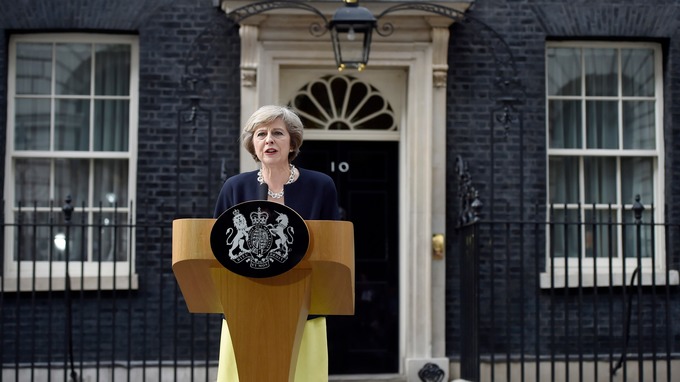
So now that the reshuffle is complete and our new Prime Minister has created her cabinet, I thought I'd compile my thoughts on Theresa May becoming the latest resident of 10 Downing Street. She wasn't my first choice, in fact at one point I was very much 'anyone but May', for a number of reasons that I shall outline here. Some of those concerns have been addressed already, others have not.

The first and, to a certain extent, overriding issue was that of Brexit. May had been a supporter of our continued EU membership and campaigned for such in the run up to the referendum, albeit in a relatively low-key manner. Given the calls in the immediate aftermath of the vote for the result to be ignored, overturned, or even run again, having a Remainer take the helm for the process of leaving the EU put me somewhat on edge. Despite several flaws, Gove was my preferred candidate of those that ran for the Tory leadership, by virtue of his having campaigned for leaving. Once the contest was whittled down to two, I didn't really know who to back. May may have been a Remainer, but Leadsom wanted us to be out of the EU by the spring, a ridiculous timetable that had no basis in reality. Coupled with her apparently devout Christianity and refusal to deny stories stating that God speaks directly to her, I found myself erring towards the former Home Secretary over a delusional amateur. Fortunately, during the short-lived leadership campaign, May was saying the right things. declaring in her campaign launch speech that 'Brexit means Brexit, and we're going to make a success of it.' The key part of that speech, for me, was this:

"So many of our political and business leaders have responded by showing that they still don't get it. There are politicians, democratically elected politicians, who seriously suggest that the government should find a way of ignoring the referendum result, and keep Britain inside the European Union. And there are business leaders, whose response has been, not to plan for Britain's departure or to think of the opportunities that withdrawal presents, but to complain about the result, and criticise the electorate. Well I couldn't be clearer. Brexit means Brexit, and we're going to make a success of it. There will be no attempts to remain inside the EU. There will be no attempts to rejoin it by the back door, no second referendum, the country voted to leave the European Union and as Prime Minister I will make sure that we leave the European Union."

This was important to hear, and was very welcome. It was also good to hear her back the electorate and the democratic process, against those such as David Lammy, who seek to ignore the biggest democratic event this country has ever seen. This cautious optimism was reinforced when May named her Brexit-backing cabinet members on Wednesday evening, with Boris as foreign secretary, Liam Fox heading up the newly created Department for International Trade and perhaps most crucially, David Davis as Minster for Exiting the European Union. The mere creation of these latter two departments would be enough to put my mind at ease but the positioning of pro-Brexit ministers in these departments sends a clear signal that we truly are leaving the EU. Bad news for europhiles hoping to ignore democracy, but great news for democrats and Brexiteers alike.

Not that it will be plain sailing from here on out. Davis sees the WTO option as a viable path for Brexit, and the new chancellor Philip Hammond has also previously mentioned leaving the single market. This is a non-starter, because it's not tariffs that are the issue, but rather regulatory harmonisation. This is why I've been an advocate of Flexcit throughout the referendum, and it was good to see it's author Dr Richard North, addressing the Treasury Committee this week, laying out the sensible approach to our withdrawal. This is where the real work will take place and I'll be looking to post in more detail about that committee in the coming days. So whilst they're not without their issues, May's appointments have at least put my mind at ease over Brexit. Hopefully those appointees will pursue a truly global free trade agenda over the coming months and years.

My biggest issue worry with May is in the realm of civil liberties. She has been one of the most illiberal and authoritarian Home Secretaries we've had in decades. May opted us back into the European Arrest Warrant, an appalling apparatus that rides roughshod over the principle of habeas corpus. During the coalition, she introduced the Data Retention Investigatory Powers Act (DRIPA), which, without prior public consultation, sought to restrict internet freedom and was eventually ruled to be unlawful. Then there is the Investigatory Powers Bill, aka the 'Snooper's Charter' which greatly expands government surveillance and poses a real threat to privacy, and journalistic integrity. It's a truly draconian bill, whose powers are available not only to domestic law enforcement and security agencies - who haven't actually asked for the powers - but to any government department, such as HMRC, for practically any purpose, giving the state the legal power to check browser histories and hack every device you use from your smart TV to your satnav. There's also no judicial oversight, with the present form of the bill allowing the Prime Minister to appoint a body to authorise warrants and audit it's own work. The more you read about it the more horrifying it becomes. It's well worth checking out Don't Spy On Us and support their work in helping to fight against this truly Orwellian piece of legislation.

On top of this we have the threat to free speech contained within Extremism Disruption Orders, which May has overseen as Home Secretary. The incredibly vague definition of 'extremism' means there's a real threat to the orders being issued for legitimate expressions of opinion, and not just for security purposes. Home office minister Karen Bradley gave a baffling performance at the Joint Committee on human rights which prompted an alarmed response from campaign group Defend Free Speech.


David Davis was one minister who helped orchestrate the legal case against DRIPA and has a relatively decent record on civil liberties. One hopes he can act as an important voice in the cabinet against May's authoritarian tendencies. Whilst she may no longer be home secretary, the appointment of the relatively beige Amber Rudd to the post suggests that May intends to keep a close eye on the department and press ahead with the current policy direction. Let's hope the likes of Davis, as well as organisations such as Don't Spy On Us and The Freedom Association (who I plan on joining shortly) can help put pressure where it's most needed.

It's not just in the realm of surveillance in which our new Prime Minister is pushing a big government agenda though. Her leadership campaign speech also set out policies for curbing big business that Ed Miliband would be proud of. Controls on chief executive pay, workers on boards - these are the kind of policies that Sam Bowman of the Adam Smith Institute rightly points out voters rejected at the last election, and for good reason. She might be only the second female Prime Minister this country has seen, but free market Thatcherite May is not. The appointment of the Heseltinian Hammond to the Treasury reinforces this.

Brexit appears to be in decent hands, or should be once the real work begins and political nonsenses can be put aside, but when it comes to domestic policy, we shall have to keep a very close eye on the new Tory leader.

Saturday, 2 July 2016

The 'March for Europe' is a march against democracy


This weekend has seen thousands of Remain voters (or if you prefer, 0.01% of the electorate) descend on London to protest against the referendum result last week. The 'March for Europe' event, is a culmination of a week of anti-democratic, sneering contempt from those on the losing side in the referendum. We have seen over 4 million people sign a petition for a second referendum. Ignoring the fact that that's still roughly 13.4 million short of being even remotely relevant, many of those signatures were found to have been added by bots, including 39,000 from Vatican City, which has a population of 800. This is probably why the petition is being investigated for fraud. Not content with leading the Lib Dems to a glorious 6% in the polls, and abandoning any pretence of being liberal or democratic, Tim Farron announced that his party would stand in the next general election on a platform of taking us back into the EU. David Lammy, a Labour MP, has already called for Parliament to ignore the result, and there has been a wailing across social media, from the public and celebrities alike, for the Government to do just that. Shockingly, the UN Special Representative for International Migration, Peter Sutherland, has said ‘somehow this result must be overturned’. The UN rightly condemns African or Asian dictators who ride roughshod over the will of their populace, yet when it comes to Britain, they're apparently calling for exactly that. The whole thing has been frankly ludicrous. Remainers would be rightly uproarious had the referendum result been reversed and parliament decided to ignore them and leave the EU anyway, but they see no problem in calling for our politicians to ignore the majority of the electorate in this instance. There's a huge irony in these people calling for as many people to register to vote and make their voice heard in the run up to this event, only for them to then call for those voices to be roundly ignored, despite leaving the EU gaining more votes in favour than anything else in British history.

Because if there was one thing that this vote represented, it was the will of the people. The issue has engaged more people in politics than anything I've ever seen. My Facebook feed is usually full of daft (if occasionally hilarious) memes and videos of dogs doing pointless yet adorable things, and yet in the run up to the referendum I saw a plethora of posts and articles from people who are usually much more content informing us all about the make-up of their dinner. This engagement was reflected in the turnout, which was higher than it has been for any plebiscite in over 20 years. Add to that the fact the winning margin was over 1.2 million votes and the claim that there is no mandate for leaving is as accurate as a blind man in a darts competition. The argument that many Brexiteers are now regretting their vote is also laughable when you consider that the source of this argument is a poll stating that 1% of leave voters are unhappy with the result. The same poll indicates that 4% of remain voters are happy with the result, indicating a greater regret about their vote amongst those that voted to remain than those that voted to leave.

Much of the argument has centred around the claim that the Leave campaign was full of lies and voters were misinformed and thus should be ignored. That argument is staggeringly patronising. All of us, on both sides of the debate, had access to the exact same information. Moreover, this wasn't a snap referendum. Cameron gave his Bloomberg speech in which he set out his plans for a referendum in January 2013, over three years ago. The Conservatives won the election last May so from that second we knew a referendum was definitely coming and thus could begin looking into the issue and trying to make ourselves as informed as possible. I'm not for one second claiming that everyone who voted was an expert on the EU, but the insinuation from Remainers that they did their homework and Leavers were somehow brainwashed by propaganda is outrageously arrogant. There were of course lies and misinformation from Vote Leave, but there was just as much from Stronger In, and they had the weight of the Government behind theirs to boot. I personally voted the way I did in spite of Vote Leave, not because of them, and I know many others who are in the same boat. There's something laughable about the suggestion too, given that the title of this protest once again conflates the EU with Europe. It seems churlish to point out, but we are not altering the UK's geography. Not one person on the leave side has advocated cutting ourselves off from the world, turning inwards, or becoming 'Little Englanders'. The argument has always been about a global Britain, looking out towards more distant horizons than those across the English channel. We have always advocated trade and co-operation with our friends and allies on the continent. Ironically, by buying into the notion that the UK is leaving Europe rather than merely extricating ourselves from a supranational political institution, Remainers have succumbed to the very brainwashing they accuse their opponents of. Claiming that one should love the EU if one loves Europe is like claiming I should love Flintshire County Council because I am fond of my home county. It is a nonsense.

There's also an argument that the whole point of the sovereignty of Parliament is to keep a check on the whims of the electorate. Funnily enough, I actually think that it's the whole point of the electorate to keep a check on the whims of Parliament. Ironically, it's precisely this argument which is why people like myself voted to Leave in the first place. The EU was deliberately designed so as to not be susceptible to the populism that brought Hitler to power in the wake of the first world war. But that lack of accountability to the electorate is precisely what's facilitated the rise of populism, both left and right wing, across the continent. When people get angry at those that rule them, and have no recourse through the ballot box to remove them, then they inevitably get drawn to the more extreme ends of the political spectrum. According to polling by both Ashcroft and ComRes, the number one priority for leave voters wasn't immigration, but democracy and sovereignty. This howling against the democratic will of the people is precisely why we voted to leave, so that our law makers and tax raisers would be accountable to us. Advocating parliament to ignore the result of the referendum and plough on with EU membership and all the integration that entails regardless, risks unleashing something very ugly in this country. If lefties hate UKIP now, they would only see the popularity of Farage's party soar in the wake of such an act. It would also exponentially increase the feeling that a vote counts for little and makes no real difference. There were no 'safe seats' in this referendum. Every single vote counted towards the result. If that result is ignored, there could well be riots, or worse, complete and total disengagement and apathy towards politics on a scale we've never seen.

I pushed for a leave vote because I believe that the electorate should decide how we are run, and should take that decision through the ballot box. I believe that Brexit has the potential to truly revolutionise our democracy, getting people more involved in politics and making our politicians more accountable. This idea that our rulers know best and the little people should shut up and let the politicians get on with it is exactly the idea we're trying to defeat.